

New York Invests $768K in Tech-Powered Plan to Bring Pocket Forests to Private Land
News originally published by
EIN Presswire
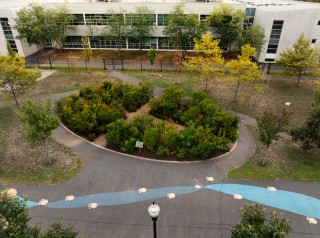
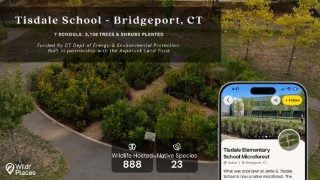
Plan it Wild and Wildr Places are building a locally grown native tree supply and a statewide network to put restoration within reach of more New Yorkers.
We kept running into the same wall. We’d plan a forest and couldn’t find the right trees grown from local seed. So we decided to grow them ourselves, here in Westchester”
WESTCHESTER, NY, UNITED STATES, November 18, 2026 /EINPresswire.com/ -- New York has a tree-growing problem. There simply aren't enough locally sourced native trees to meet growing restoration demand. A new $768,099 grant from the New York State Department of Environmental Conservation (DEC) aims to change that by combining local tree production, technology, and community partnerships to bring more forests to private land across the state.— Dave Baker
Westchester-based landscape firm Plan it Wild received the award through DEC's Advancing Forest Markets program, which supports New York's 25 Million Trees initiative. The funding will establish a new native tree nursery in Somers and support a statewide campaign led by Wildr Places to help landowners plan and plant Pocket Forests.
The challenge isn't simply getting more trees in the ground. It's getting the right trees. Many native trees nurseries sell are grown from seed collected hundreds of miles from where they'll eventually be planted. Locally sourced trees, known as ecotypes, are adapted to regional soil, weather, and growing conditions, making them particularly valuable for restoration. Yet they're often difficult to find, even for experienced professionals.
Plan it Wild, co-founded by Dave Baker, is working to close that supply gap by growing its own. The grant will support the expansion of its Somers nursery, including a new 4,000-square-foot greenhouse and two new nursery positions. The company expects to grow more than 10,000 trees by early 2028, scaling production to more than 25,000 annually by 2033.
“We kept running into the same wall. We'd plan a forest and couldn't find the right trees grown from local seed. So we decided to grow them ourselves, here in Westchester,” said Baker.
Those trees will help fuel a different kind of restoration: Pocket Forests planted on private property, from schoolyards and college campuses to residential landscapes. These dense, layered plantings bring the benefits of native forests to smaller spaces, creating habitat, supporting biodiversity and reconnecting people with nature.
Plan it Wild has already planted 20 Pocket Forests, including one at an elementary school in Pelham. Requests have tripled in the past year, and a planned project at SUNY Purchase could become one of the country’s largest Pocket Forests.
Growing trees is only half the equation
The grant supports two connected pieces of a larger restoration strategy. Plan it Wild will grow the trees and lead the on-the-ground work, while Wildr Places will help build the demand, partnerships and participation needed to scale the model.
“Most people want to plant something that matters. They just don't know where to start or where to get the right trees. We want to make that the simple part,” said Wildr Places co-founder Joanna Hall.
Wildr Places uses technology, education and community partnerships to help people take action on their own land. Its online platform and statewide marketing campaign will connect New Yorkers with more than 200 local partner organizations, helping landowners understand the value of restoration, plan a Pocket Forest and access locally grown trees.
A model with potential beyond New York
The approach is also attracting attention beyond the state. On Nov. 16, Bram Gunther, former NYC Parks Chief of forestry and Wildr's chief of science, and Zoe Evans, Wildr's Vice President of Partnerships and Programs, presented the model at the Trees + Tech Summit in St. Louis.
Their presentation explored what they call the private property paradox: Cities and states have ambitious goals to expand tree canopy and wildlife habitat, but much of the land that could help achieve them is privately owned. Technology can help reach those landowners, but local relationships are what turn interest into action.
“Technology lets us reach landowners at a scale no one could before, but it’s the local partners who get people to act,” said Gunther. “That combination of national reach and local roots is what resonated with people.”
A pre-order marketplace is another important piece of the model. Planned for late 2027, it will allow landowners to signal what they want to plant before growers invest years in production. By giving growers a clearer picture of landowner preferences before trees go into production, it can reduce the financial risk of growing native inventory and help other nurseries make more informed decisions. Local inventory will eventually be available for purchase through the Wildr Places app for local residents.
The long-term vision is bigger than one nursery or one state. Plan it Wild and Wildr Places hope to demonstrate how local growers, technology, and community networks can work together to make private-land restoration more accessible, scalable, and lasting.
About Plan it Wild: Plan it Wild is a Somers, N.Y.-based landscape firm specializing in Pocket Forests and native landscapes for schools, campuses, parks and homeowners across the region. Learn more at www.planitwild.com.
About Wildr Places: Founded in 2026, Wildr Places is the first app that helps homeowners transform their yards into thriving native-plant habitat. Featured on the TODAY Show and in The New York Times, the Wildr Places team is also behind Less Lawn More Life, a national campaign uniting 175+ partners, including Audubon, Homegrown National Park, and Cornell Lab of Ornithology. Available on iOS and Android at joinwildr.com.
Katie Dubow
Garden Media Group
+1 610-444-3040
Visit us on social media:
Instagram
Facebook
X
Legal Disclaimer:
EIN Presswire provides this news content "as is" without warranty of any kind. We do not accept any responsibility or liability for the accuracy, content, images, videos, licenses, completeness, legality, or reliability of the information contained in this article. If you have any complaints or copyright issues related to this article, kindly contact the author above.
